Showing posts with label totally postcard tuesday. Show all posts

Tuesday, April 10, 2012

Totally Postcards Tuesday - Undivided Back Cards and Private Mailing Cards

http://www.facebook.com/PostcardsInTheAttic
I have mentioned before that my Grandparents are the people who had interested me in collecting postcards.  They were knowledgeable but they were not true collectors in the sense that they saved them for the cards' value but they saved them, like many people from that generation, because they liked the images. 

When I first started collecting I had asked several times why the backs of the postcards had to tell the people which side was for writing a message and which side had to have the address.  I thought that if I, at age 8, knew that you always put the address on the lower right of anything you sent, that the people from the early 1900's had some issues.  But of course they explained that before those cards were made that people wouldn't be able to write a message on the back at all and that it was simply telling them that it was alright for them to do so.  I didn't think much more about it until I started to take my collection seriously and now have found that the postcard, as we now know it, has gone through a lot of controversy, politics, and even a little bit of a fight to get its start.

There is history that goes farther back than the late 1800's from other countries but I am going to focus more on the history of cards that I am familiar with, which is primarily the US

People first used postcards as quick way to send a message. It was not intended to be decorative or to send the beautiful images of travels that we see today.  The first privately made postcard was printed in 1861 by a man from Philadelphia, John P. Charlton, he copyrighted this card and then sold to another man by the name of H.L. Lipman.  At that time the card was simply adorned by a small trim and the words "Lipman's Postal Card, Patent Applied For."(1) In 1873 the US government made an official US Government Postcard with preprinted postage that replaced the Lipman cards.

Cards that were made privately during this time period were either hand delivered by the person or they would cost the same 2 cent stamp to be mailed, which was the standard cost of a letter.  Once the government started to print postcards they charged only 1 cent to mail theirs but all other privately made cards were still the standard 2 cent rate.
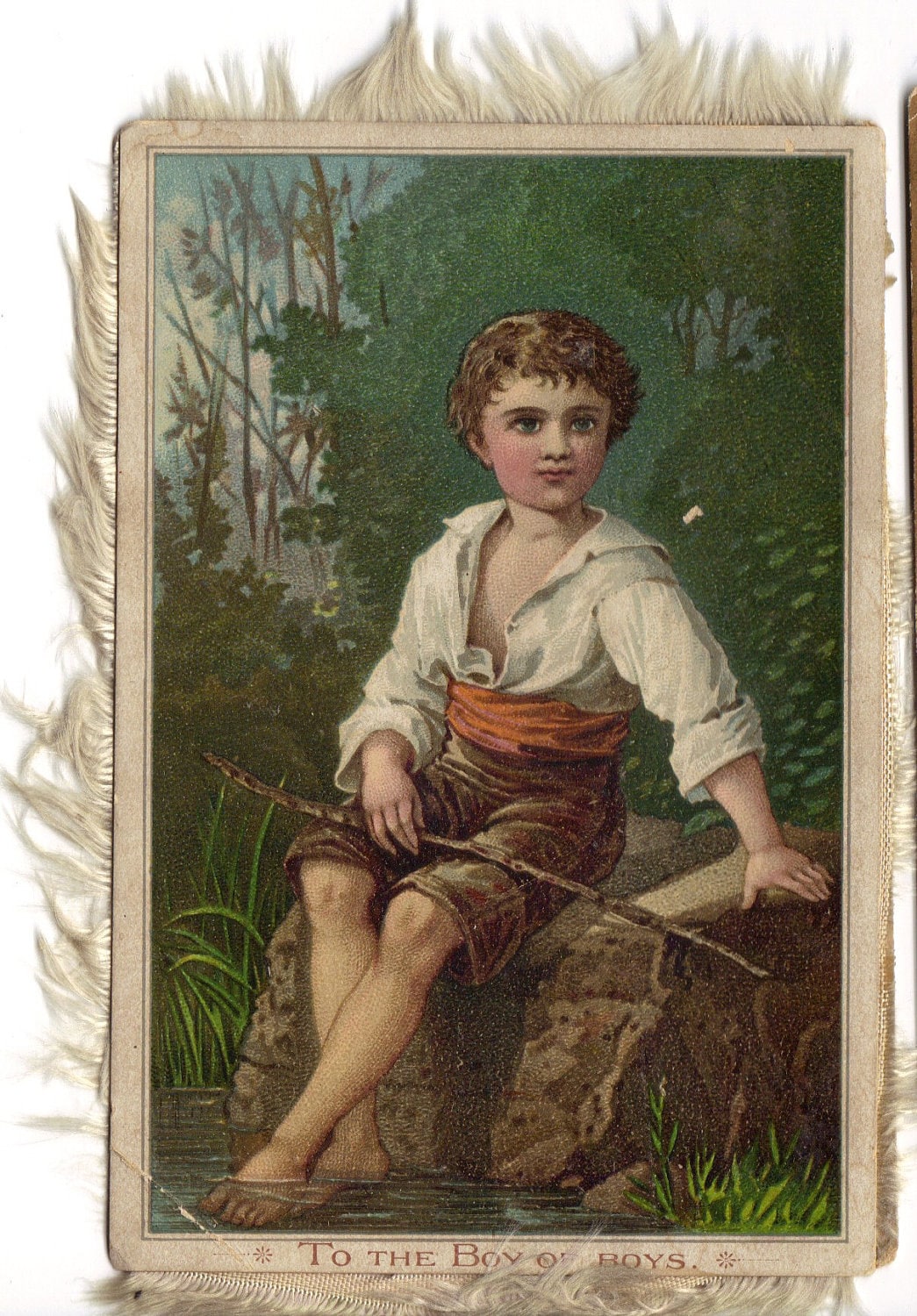
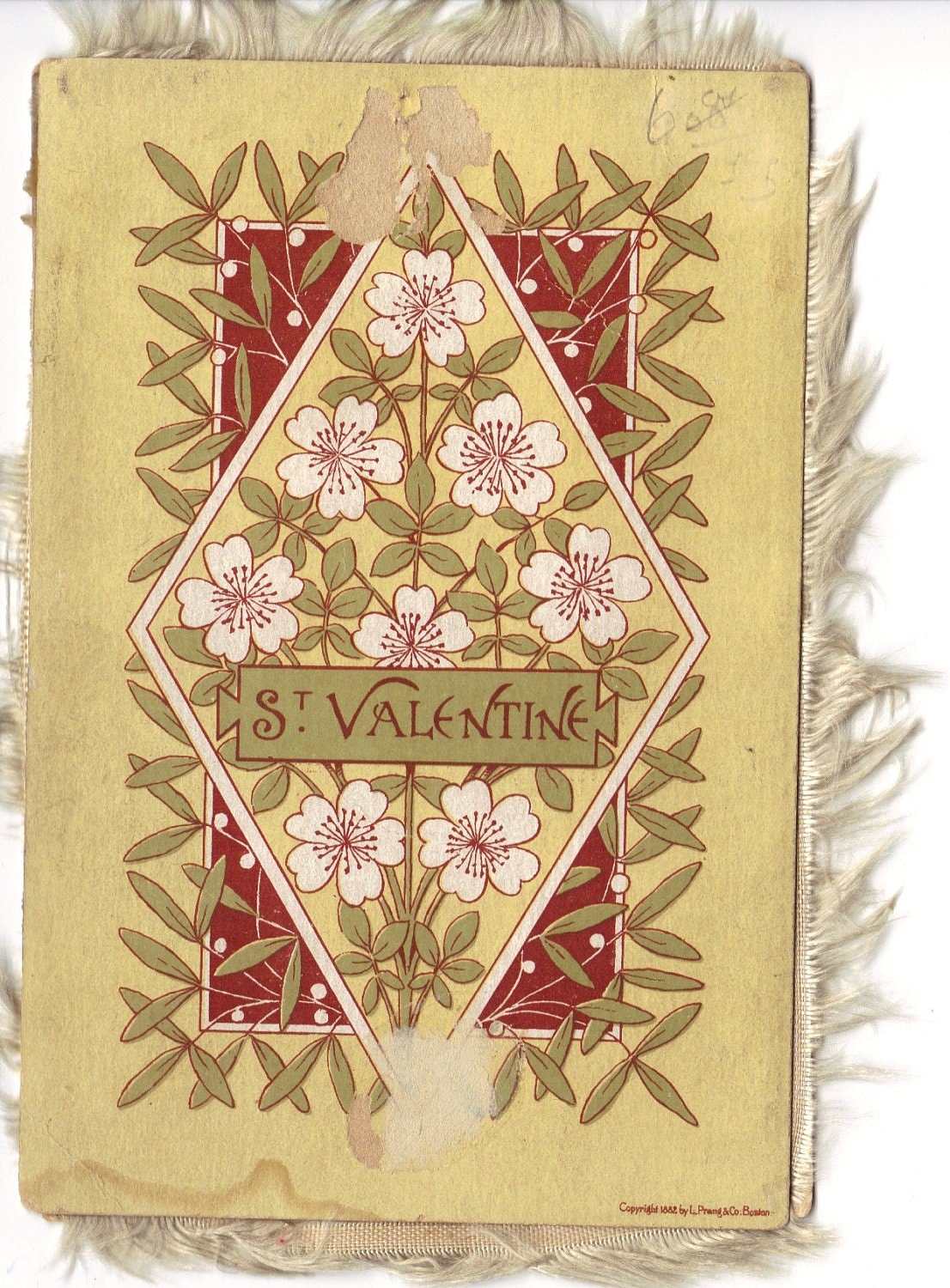
This example is from 1882 and would have had to been hand delivered (see next image)
It can be purchased at http://www.etsy.com/listing/74905763/antique-1882-valentine-postcard-boy-of?ga_search_query=valentine&ga_search_type=user_shop_ttt_id_6244670
The first government cards were not intended to be collectible or souvenirs so they were very plain with no images or a simple vignette image showing some advertising.  It wasn't until 1893 at the Colombian Exposition in Chicago that government printed a decorative image onto the postcard meant for people to collect as souvenirs.

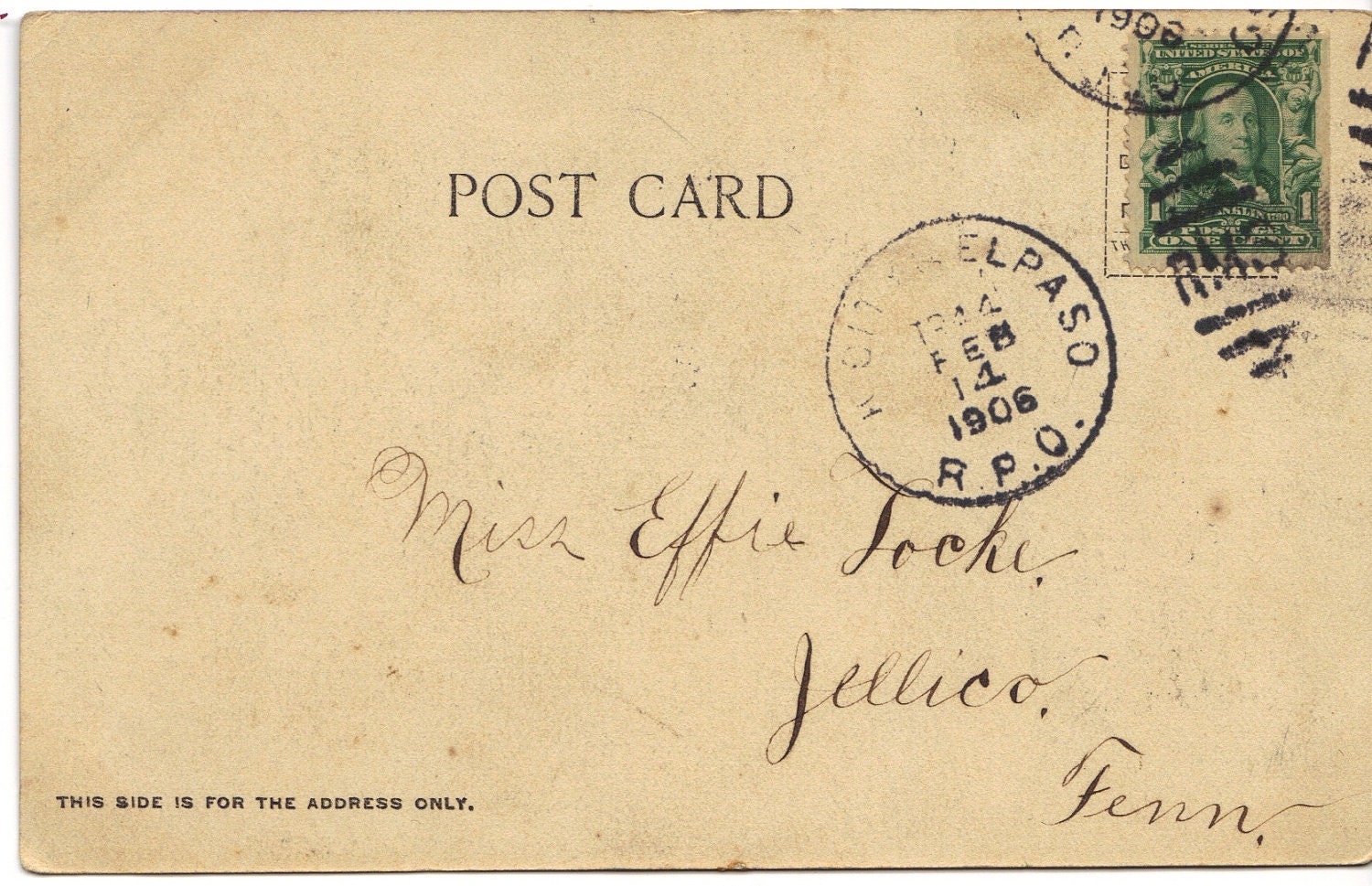
In 1898 congress passed the Private Mailing Card act that allowed private cards to be mailed for the 1 cent rate but the cards could not be called "Postcards" that was reserved for the government printed cards only. Instead the private cards had to have the words "Private Mailing Card Authorized by Act of Congress of May 19, 1898" on the back as you can see by my example below.


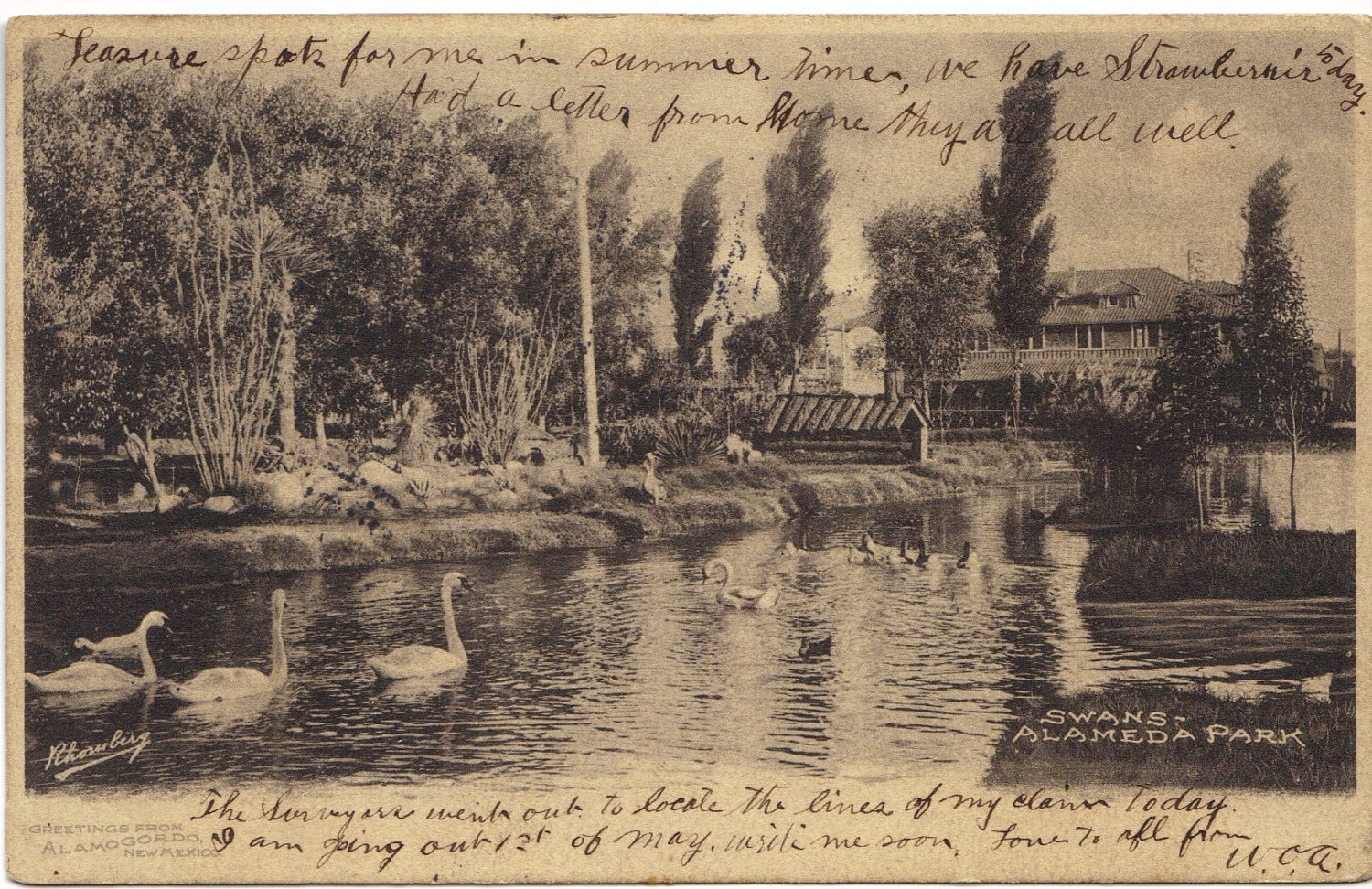
During this same period it was not legal for the sender to write anything other than the address on the backs so there was no need to have the card backs divided, like many are today, and that would be what is called the Undivided Back Postcard (UDBP.)  If the person wanted to write a message on the postcard it had to be written across the front of the image.  Often the cards accommodated this by leaving a large, overstated, blank margins to write in so it wouldn't ruin the image.
This example of an Undivided Back can be found at
http://www.etsy.com/listing/78523007/1900-antique-postcard-swans-alameda-park
December 24 1901 the makers of Private Mailing Cards were granted permission to use the words Post Cards or Postcards from the US government and they were no longer required to print "by act of congress..." on the backs.  The cards were mailed with the cheaper government card rate of 1 cent and they were no longer forced to identify themselves as private mail.

After 1907 the government started to allow people to write on the backsides of postcards and as you can see by my example they actually wrote "Writing on this part of the address side permitted after March 1, 1907"  Later it was shortened to phrases like "This space for communication" and that is why it was necessary to tell people where they could write the message.  An 8 year old child's question has finally been answered.

This was a very brief overview and for some of the dates and specific names (1)  I referenced information provided by http://www.emotionscards.com/museum/historyofpostcards.htm.  They have so much more information if you are interested I strongly suggest checking them out they are very informative and helpful to me when I am trying to identify new cards I find.

Tuesday, March 6, 2012

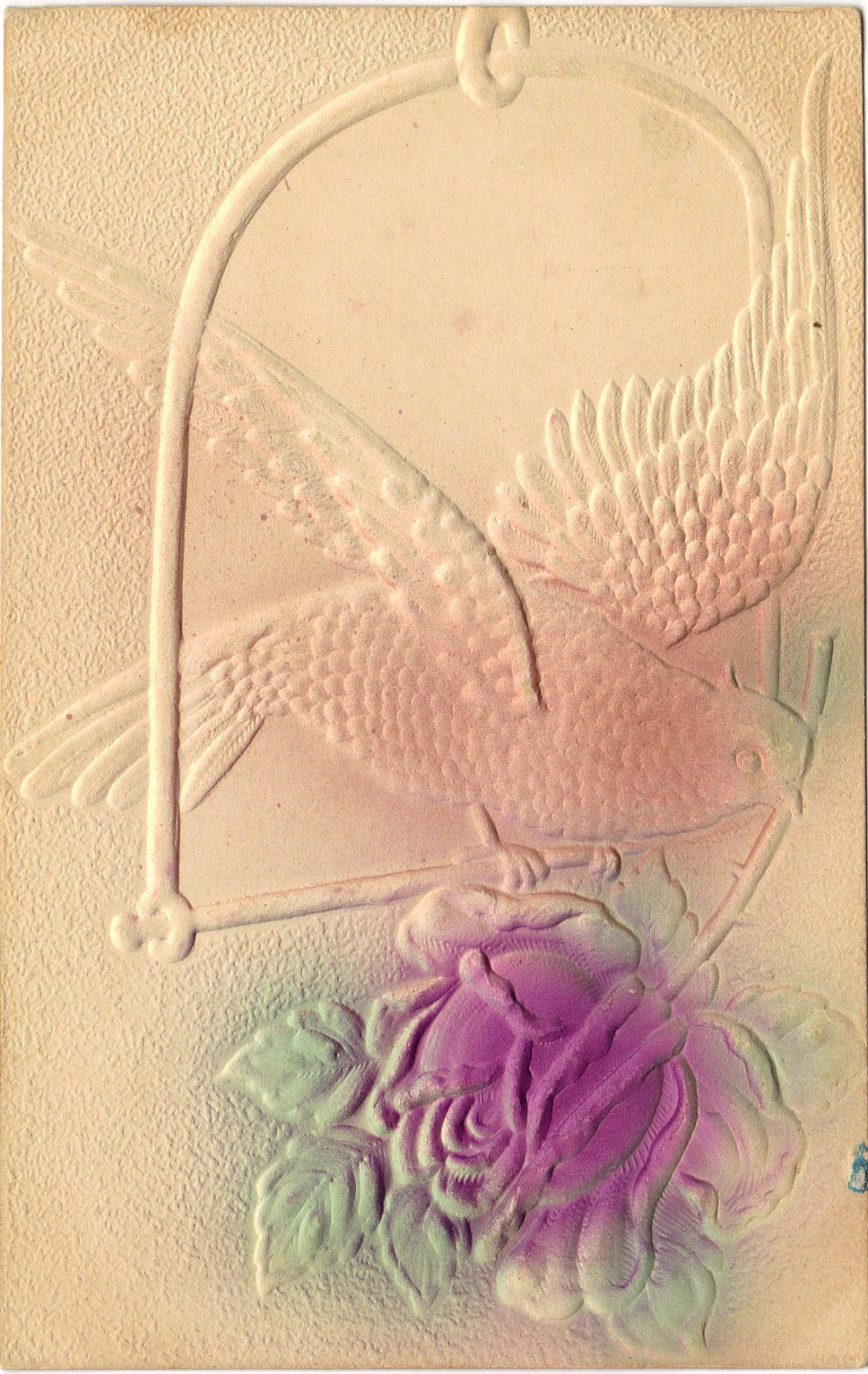
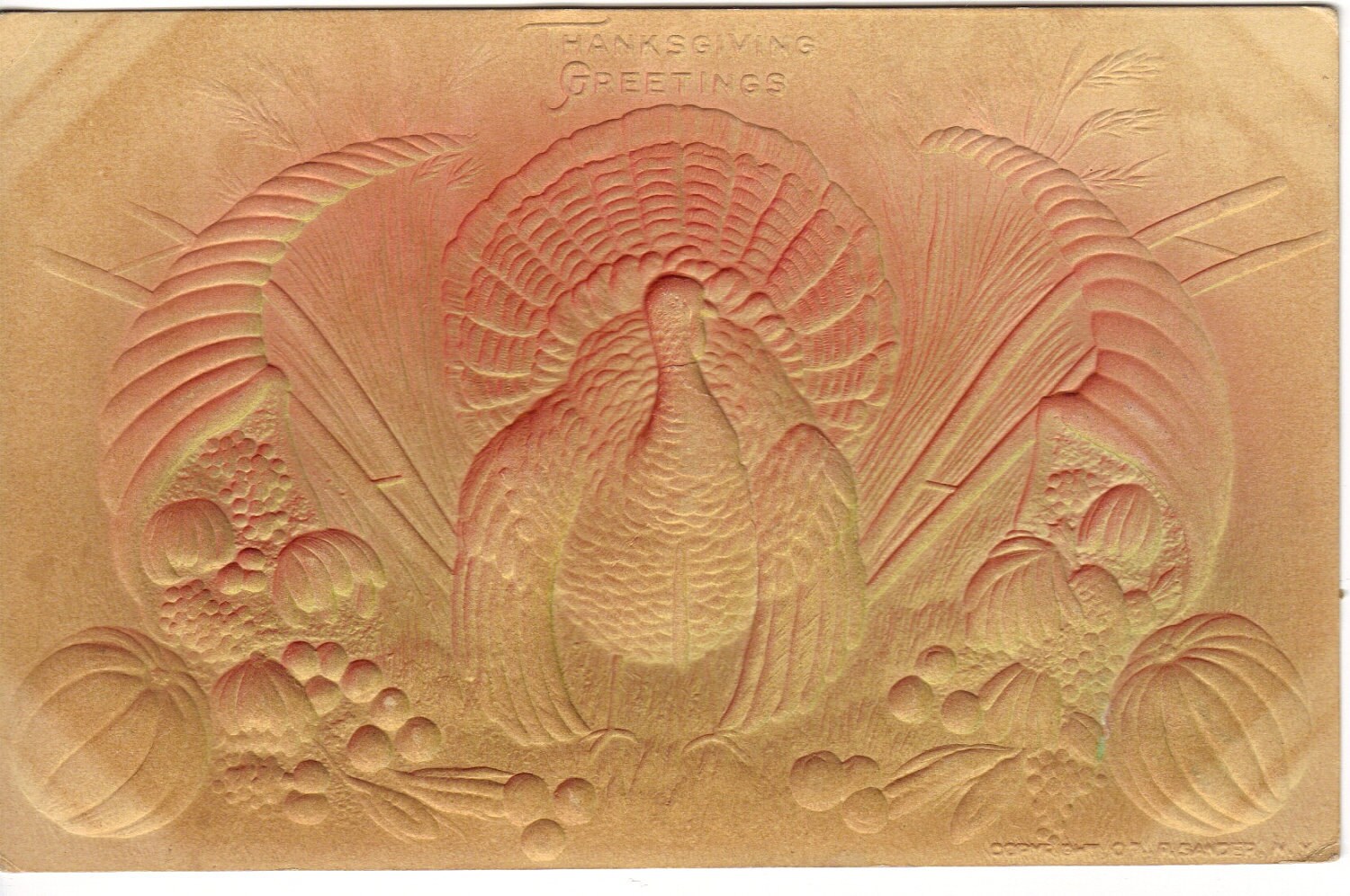
Totally Postcard Tuesday - Blind Embossed - Heavily Embossed

In the early 20th century competition in the world of postcard printing was fierce.  There were new and old techniques that could do amazing things with paper all fighting to catch the eye of the potential buyer.  You could find postcards that would depict amazing world events to postcards that told a tall tale with giant vegetables and fish.  You could also find postcards that were embellished with feathers, glitter and charms.  But one kind of novelty card seemed simple but really was a little bit more daunting to make than people realized and that was the embossed postcard.

While all there seemed to be to embossing a card was to raise up the paper it had several things that could make it a challenge.  Printing techniques were advancing but there were no means to avoid having to use an actual press to apply the image so most of the embossing was done after the card was printed.  After the image was applied the card was lined up, often using pins, and put through another press that had male and female plates to mold the card.  This process was common and used for many types of scenes and images.

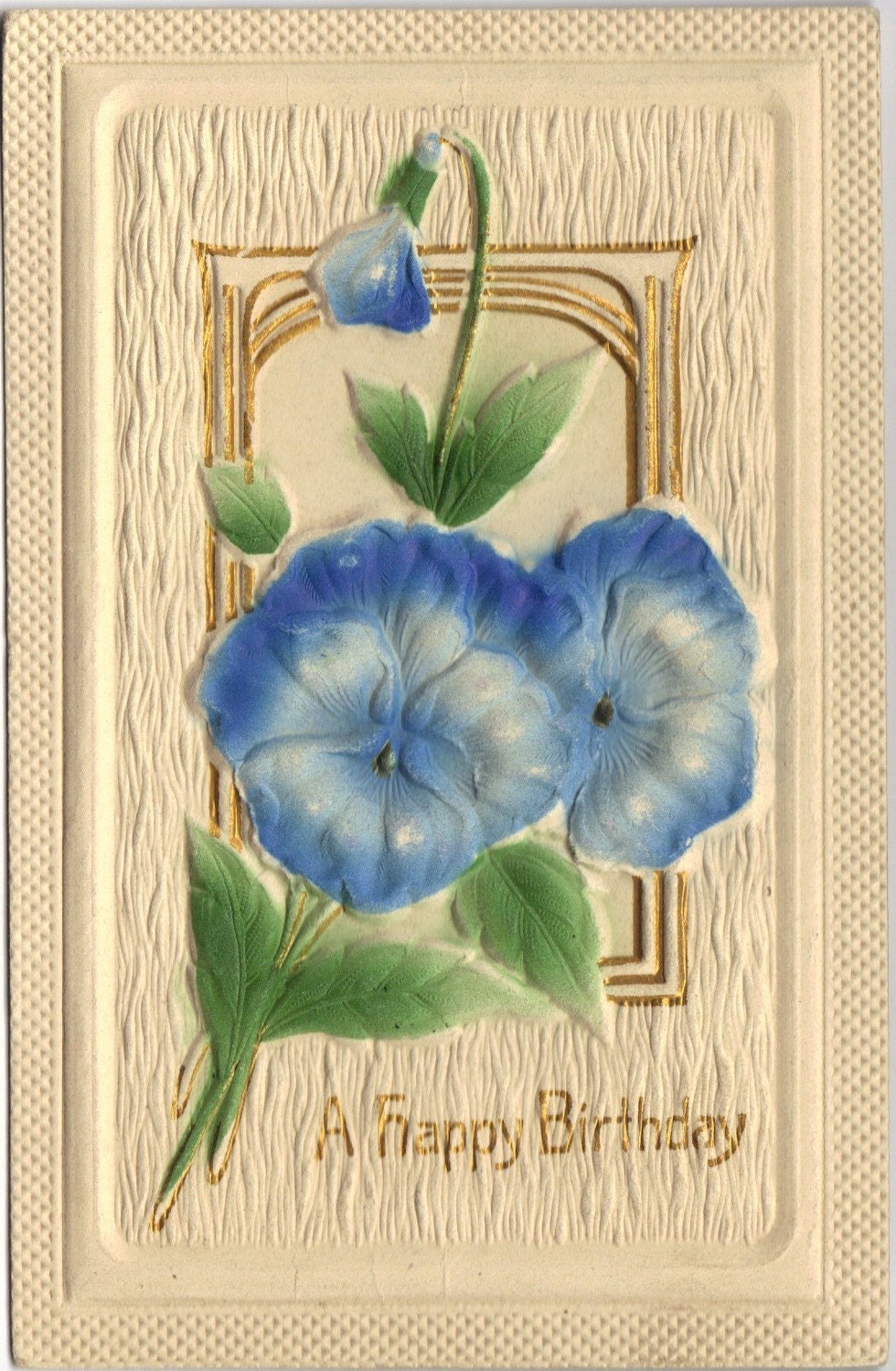
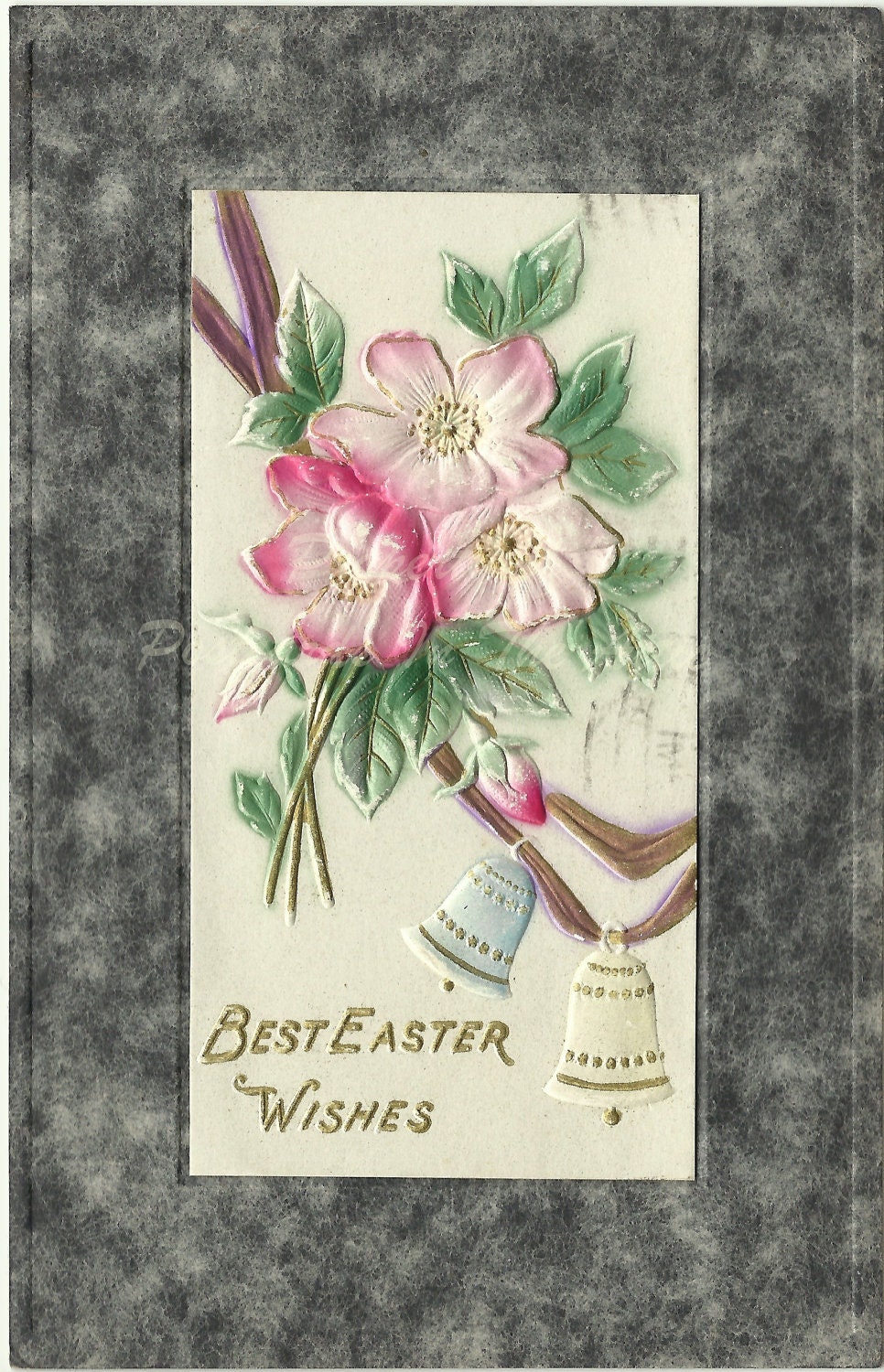
However there are cards that have been "heavily embossed" or "blind embossed" which almost look as if they were made out of paper mache.  These cards have not been printed because the printers found that once they applied the pressure and heat necessary to make such a deep embossment, the ink would crack and be ruined.  They also found that painting the cards by hand didn't work because the paper would become soft and the embossing would then be damaged.  So most cards that are heavily embossed are air brushed.  A number of years ago I mistakenly thought that airbrushing was a fairly modern technique but it turns out that it has been used since the late 1800's. 

These heavily embossed cards are so pretty and soft looking because of the airbrushed technique.  One other feature with many of these cards is it that they are mounted on another piece of paper or cardboard so that they could be written on.  The deep impressions on the other side would be a challenge for the correspondent so they simply glued it to another layer. 

Often the heavily embossed cards were damaged during storage and use making them a little bit more of a challenge to find.  It is best to store the cards in an archival quality sleeve and keep them in acid free containers resting on their side so as not to squish the embossed image.

Here are some examples found in Postcards In The Attic:


Tuesday, February 28, 2012

Totally Postcard Tuesday - Street Scenes

Street scenes are one of the many reasons why I love to collect postcards. In the early 20th century more people lived in rural areas than in the hustle and bustle of the city. But the cities and towns were the life support of those that lived outside of it. It was the center for all of modern innovations and machinery; they were the epitome of the American Industrial Dream.
http://www.etsy.com/listing/69660367/postcard-shopping-district-buffalo-ny?ga_search_query=new%2Byork&ga_search_type=user_shop_ttt_id_6244670
The pictures printed these cities touched with color to proudly display modern travel and modern life in the big cities and towns. I can't imagine how many children would look at these cards and dream of living or at least visiting San Francisco or New York. The amazing public transportation line, power lines that lit up the streets, people everywhere chatting and it seemed that everyone was busy doing something in these cards.
http://www.etsy.com/listing/69660976/postcard-main-street-buffalo-ny-antique?ref=v1_other_1
Without television everything was an event and most often it could not be done in the privacy of your own home. People actually had to dress up, leave their house and go see the circus or the parade. They were happy to leave the monotony of the daily life. The interaction between people may not have always been perfect but at least they interacted. They had to; there’d been no other way to convey a message or to see something. People would congregate around interesting things such as newspaper stands to talk about the daily events, crowds would form if a stranger rolled in with something new and amazing on his cart.

In present times these postcards are very collectible and sometimes a challenge to find. Their charm and appeal comes from a little touch of nostalgia many of us feel as we see the interactions beautifully illustrated. Most important is that the people are busy doing and seeing new things for themselves not virtually. The personal connection of people in the early 20th century is something that we have unfortunately lost over time and our wonderful nation has certainly changed.

When these beautiful cards were first sold people often longed to visit distant places joining in the activity of a modern city. Now many of us look at these beautiful cards and long for a distant time and to join in the activity of a society before cell phones.